



 560 656

the yield across other diseases
[13]. In a cohort of over
15 000 patients with varying malignancies (primary lung,
colorectal, and breast cancer), GAs were detected in just
over 80% of patients. Importantly, the current study also
raises the hypothesis that certain GAs may arise as a
consequence of selective pressure from therapy. An
increased frequency of
TP53
and
NF1
mutations in post-
first-line therapy patients with subsequent VEGF-directed
therapy imply a role in therapeutic resistance.
The results described herein offer a unique opportunity
to juxtapose observed mutational frequencies against what
has been observed in other large experiences, such as TCGA.
[(Fig._2)TD$FIG]
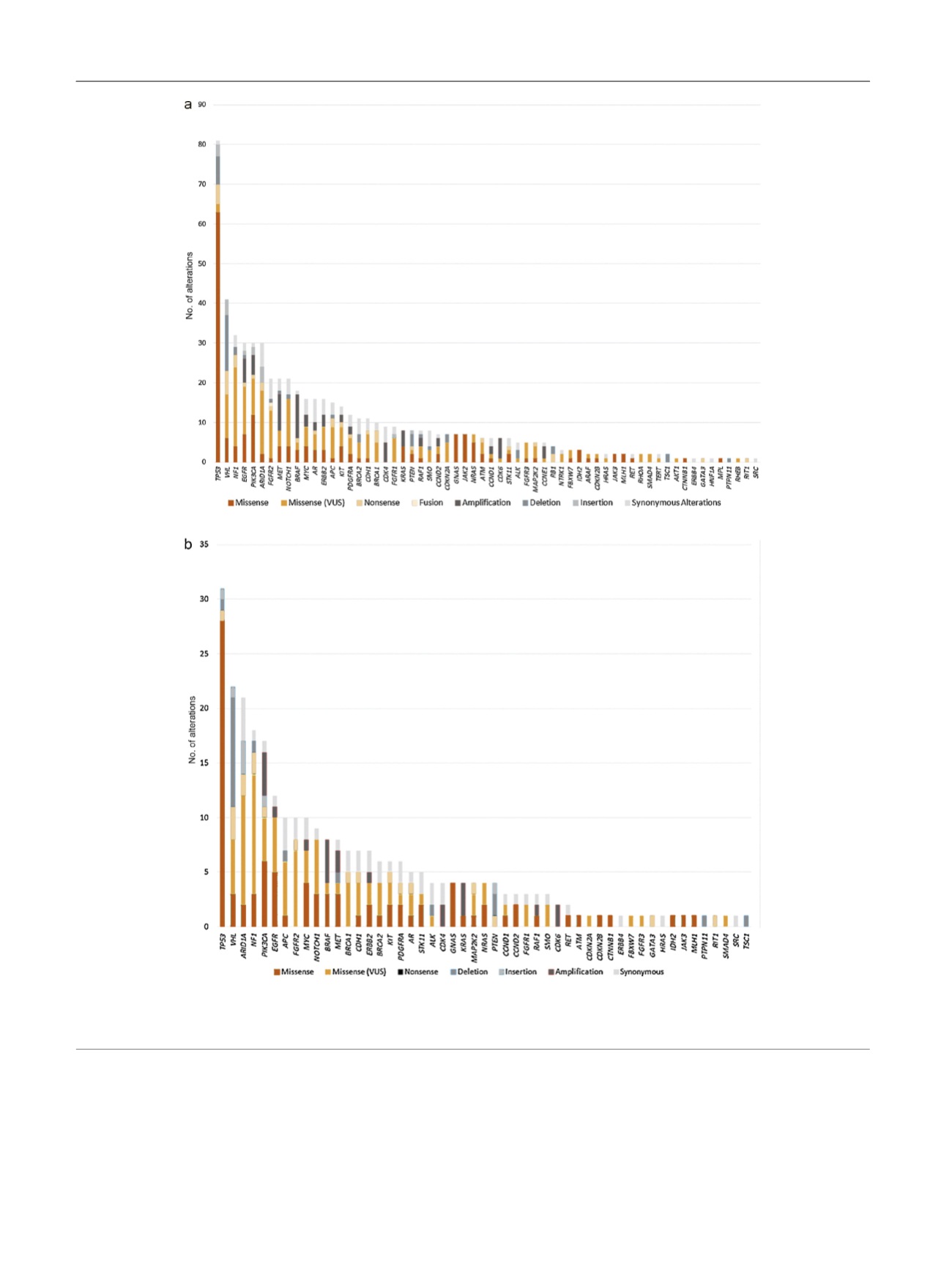
Fig. 2 – Cumulative genomic alterations in circulating tumor DNA across (A) 220 patients with renal cell carcinoma (any histology) and (B) 89 patients
with documented clear cell renal cell carcinoma.
VUS = variants of uncertain significance.
E U R O P E A N U R O L O G Y 7 2 ( 2 0 1 7 ) 5 5 7 – 5 6 4
560